Introduction
In today’s highly competitive business environment, organizations rely on technology to improve efficiency, strengthen customer relationships, and streamline operations. Among the most important business management solutions are Customer Relationship Management (CRM) and Enterprise Resource Planning (ERP) systems. While both platforms help businesses achieve growth and operational excellence, they serve different purposes and address distinct organizational needs.
Many business owners and managers often confuse CRM and ERP because both systems manage critical business data and contribute to better decision-making. However, understanding the differences between CRM and ERP is essential for selecting the right solution and maximizing business performance. This article explores the key distinctions between CRM and ERP, their functions, benefits, and how businesses can use them together for greater success.
What Is CRM?
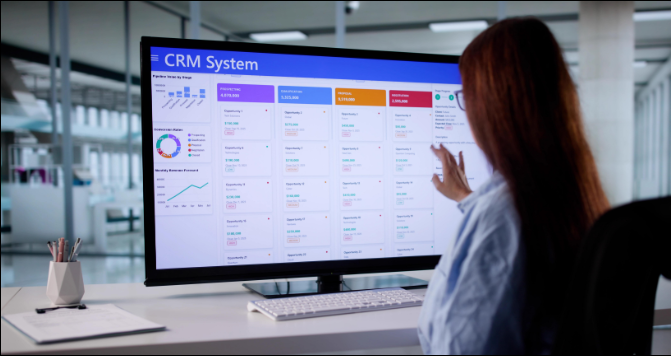
Customer Relationship Management, commonly known as CRM, is a software solution designed to manage interactions between a business and its customers. The primary goal of a CRM system is to improve customer relationships, enhance customer satisfaction, and increase sales opportunities.
CRM platforms collect and organize customer information such as contact details, communication history, purchase behavior, preferences, and support interactions. This centralized database allows sales, marketing, and customer service teams to access accurate information and provide personalized experiences.
A CRM system helps businesses track leads, manage sales pipelines, automate marketing campaigns, and improve customer support. By maintaining a complete view of customer interactions, organizations can build stronger relationships and improve customer retention.
Modern CRM solutions often include features such as sales automation, marketing automation, customer service management, reporting dashboards, and customer analytics. These capabilities help businesses better understand customer needs and make informed decisions based on data.
What Is ERP?
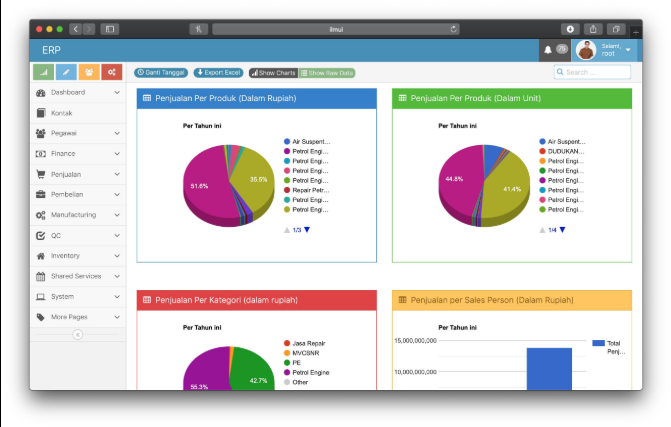
Enterprise Resource Planning, or ERP, is a comprehensive software platform designed to manage and integrate core business processes across an organization. Unlike CRM, which focuses primarily on customers, ERP focuses on internal business operations.
ERP systems centralize information from various departments, including finance, accounting, human resources, procurement, inventory management, manufacturing, supply chain operations, and project management. By integrating these functions into a single system, ERP software improves efficiency, reduces data duplication, and enhances collaboration across departments.
An ERP solution provides real-time visibility into business operations, enabling managers to monitor performance, allocate resources effectively, and make strategic decisions. It acts as the backbone of an organization by connecting multiple business functions through a unified platform.
Companies often implement ERP systems to streamline workflows, improve financial accuracy, optimize inventory management, and ensure regulatory compliance. As businesses grow, ERP solutions become increasingly valuable for managing complexity and maintaining operational control.
The Primary Focus of CRM and ERP
One of the most significant differences between CRM and ERP lies in their primary focus.
CRM systems are customer-focused. Their purpose is to help businesses attract, engage, and retain customers. They support activities related to sales, marketing, and customer service, ensuring that every customer interaction contributes to a positive experience.
ERP systems, on the other hand, are process-focused. Their objective is to improve internal operations and resource management. ERP platforms help organizations coordinate departments, streamline workflows, and maintain accurate records across the entire business.
In simple terms, CRM focuses on generating revenue through customer relationships, while ERP focuses on managing resources and operations efficiently.
Key Features of CRM Systems
CRM software offers a variety of features designed to improve customer engagement and sales performance. One of the most important features is contact management, which allows businesses to store and organize customer information in a centralized location.
Sales pipeline management is another essential capability. Sales teams can track leads through every stage of the sales process, identify opportunities, and forecast future revenue.
Marketing automation enables businesses to create targeted campaigns, send personalized communications, and nurture leads more effectively. Customer service tools help support teams manage inquiries, resolve issues quickly, and maintain high levels of customer satisfaction.
Reporting and analytics provide valuable insights into customer behavior, sales performance, and marketing effectiveness. These insights help organizations refine strategies and improve outcomes.
Key Features of ERP Systems
ERP systems offer features that support a wide range of operational activities. Financial management is one of the core components, allowing businesses to manage accounting, budgeting, invoicing, and financial reporting from a single platform.
Inventory management helps organizations monitor stock levels, track inventory movements, and reduce carrying costs. Procurement modules streamline purchasing processes and supplier management.
Human resources functionality supports employee records, payroll processing, recruitment, and performance management. Manufacturing and production management features help companies plan production schedules, manage resources, and optimize workflows.
Supply chain management tools provide visibility into logistics operations, helping businesses improve efficiency and reduce delays. Together, these features create a comprehensive system for managing enterprise-wide operations.
Benefits of CRM for Businesses
Implementing a CRM system offers numerous benefits for organizations seeking to improve customer relationships and drive revenue growth.
One major advantage is enhanced customer satisfaction. By providing employees with complete customer information, businesses can deliver more personalized and responsive service.
CRM systems also improve sales efficiency by automating repetitive tasks and enabling sales teams to focus on building relationships and closing deals. Better lead management contributes to higher conversion rates and increased revenue.
Another benefit is improved collaboration between sales, marketing, and customer support teams. Shared customer data ensures that all departments work with consistent information and deliver a unified customer experience.
Additionally, CRM analytics help businesses identify trends, measure performance, and make data-driven decisions that support long-term growth.
Benefits of ERP for Businesses
ERP systems deliver significant advantages by improving operational efficiency and organizational visibility.
One key benefit is data centralization. Instead of maintaining separate systems for different departments, businesses can access a single source of truth for critical information. This reduces errors and improves data accuracy.
ERP solutions also enhance productivity by automating routine processes and reducing manual work. Employees can complete tasks more efficiently, leading to lower operational costs.
Improved reporting capabilities provide management with real-time insights into financial performance, inventory levels, and operational metrics. These insights support better decision-making and strategic planning.
Furthermore, ERP systems help organizations maintain compliance with regulatory requirements and industry standards, reducing risks associated with audits and reporting obligations.
Can CRM and ERP Work Together?
Although CRM and ERP serve different functions, they are often most effective when used together. Integration between the two systems creates a seamless flow of information across customer-facing and operational departments.
For example, when a sales representative closes a deal in the CRM system, the information can automatically transfer to the ERP platform for order processing, invoicing, inventory updates, and fulfillment. This eliminates duplicate data entry and reduces the risk of errors.
Integrated CRM and ERP systems provide a complete view of both customer relationships and business operations. This comprehensive perspective enables organizations to deliver better customer experiences while maintaining operational efficiency.
Many modern software vendors offer integrated solutions or built-in connectors that allow businesses to synchronize data between CRM and ERP platforms with minimal effort.
Conclusion
Understanding the differences between CRM and ERP is essential for businesses looking to invest in technology that supports growth and efficiency. While CRM focuses on managing customer relationships, improving sales, and enhancing customer experiences, ERP concentrates on optimizing internal operations, resource management, and organizational performance.
Rather than viewing CRM and ERP as competing solutions, businesses should recognize their complementary roles. CRM helps generate and maintain customer relationships, while ERP ensures the organization can efficiently deliver products and services.
By selecting the right system—or integrating both—companies can create a strong foundation for sustainable growth, improved productivity, and long-term business success.